
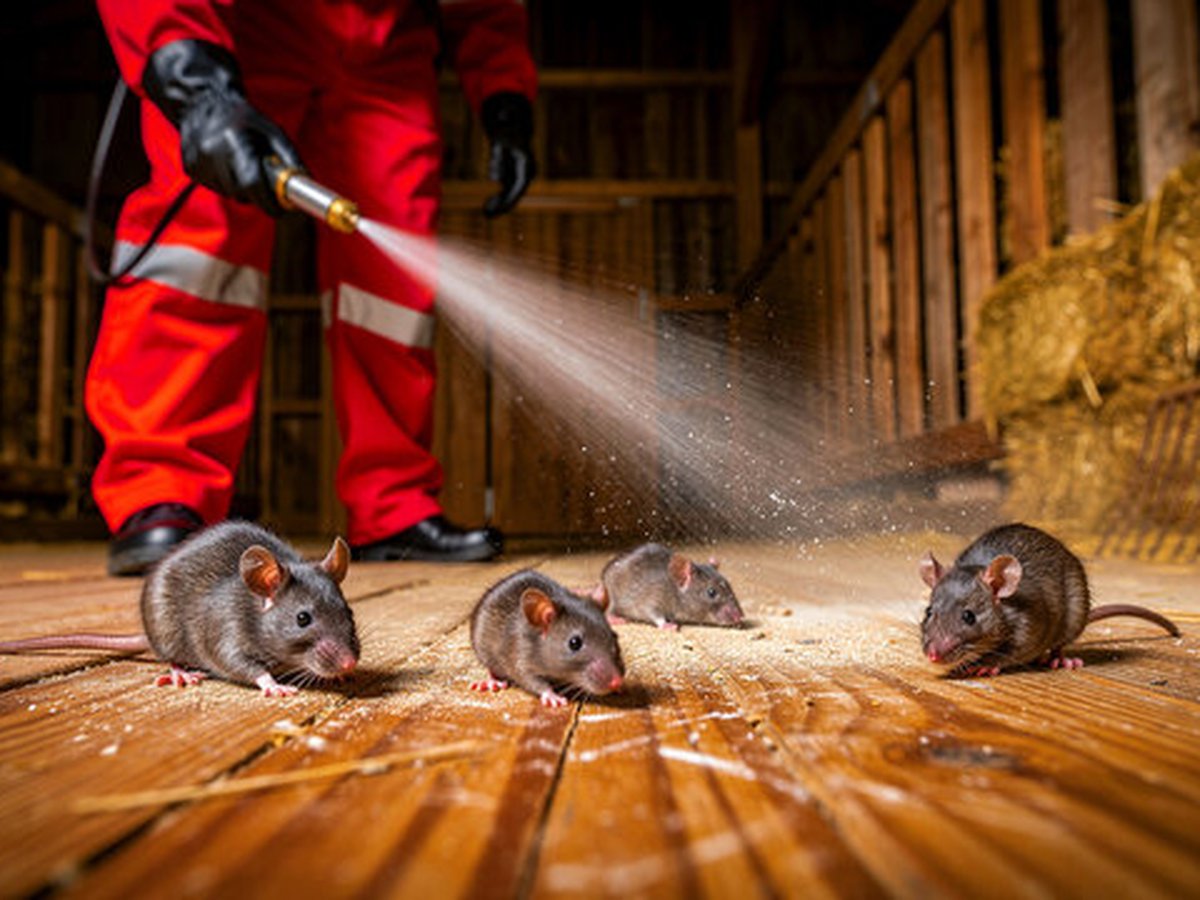
Dallas has two different rat problems depending on which part of the metro you're calling from. Under the mature oak and pecan canopy of Lakewood, Oak Cliff, the M Streets, and the blocks ringing White Rock Lake, a rat overhanging limb and a power line are practically an invitation to a roof rat, and these lean, agile climbers slip into an attic through a torn soffit screen or a gap where the fascia has pulled away from the roof deck. Farther south and west, in the newer slab neighborhoods of Grand Prairie, DeSoto, Cedar Hill, and Duncanville, tree cover is thinner and the pressure shifts to Norway rats working fence lines, AC condenser pads, and dense foundation plantings at ground level instead.
The ground under almost all of it is Blackland Prairie clay, and that matters more here than most homeowners realize. This heavy black soil swells hard after a rainy stretch and shrinks just as hard through a dry Texas summer, and that constant movement cracks slab edges and pulls small gaps open around plumbing penetrations, expansion joints, and foundation trim that were tight when the house was built. Because the overwhelming majority of Dallas homes sit on a slab rather than a crawl space, there's no open underside for a Norway rat to den beneath the structure, which pushes even ground-level activity toward whatever opening it can find at the slab edge, the garage door seal, or the roofline above.
Our long, hot summers are the real driver of indoor activity, not a fall cool-down the way colder regions see it. Once triple-digit stretches set in, rats move toward shade, standing water, and the cooler air near an attic's HVAC ductwork, and that pressure holds through most of the warm season. A hard winter cold snap adds a second, shorter push indoors, but Dallas winters rarely stay cold long enough to knock a population back the way a harder freeze would farther north.
We start every call with a real inspection — walking the roofline, checking the attic joist by joist, and circling the slab perimeter for droppings, rub marks, and burrow sign — to confirm whether we're dealing with roof rats, Norway rats, or both on the same property. We trap the active population first, then seal every entry point with heavy-gauge hardware cloth, galvanized flashing, and mortar patching, never foam or steel wool alone. You get a written report and a workmanship warranty on the exclusion work. Call (888) 619-6082 for a free inspection.
📞 Call (888) 619-6082