
๐Ÿ“ž Call for a Free Quote: (888) 619-6082

Rodent Exclusion & Entry Point Sealing in Dallas, TX

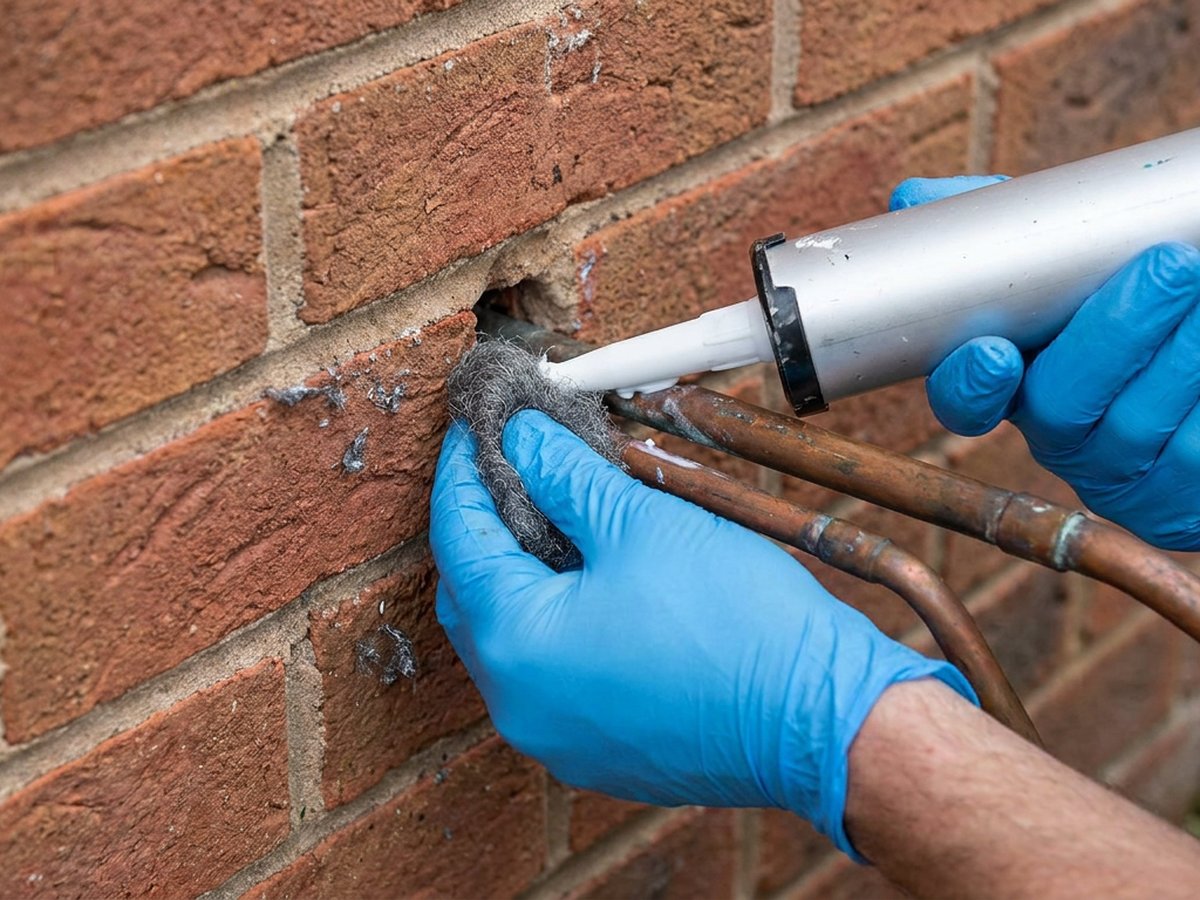
Sealing a rodent entry point at a slab-edge weep hole in Dallas, TX

Trapping clears out the rodents already inside. Exclusion is the work that stops the next ones from getting in, and it's the single most important part of any job we run in the Dallas area โ€” without it, a house stays a revolving door no matter how many traps get set. Because well over nine in ten homes across Dallas and its southern and western suburbs sit on a slab rather than a crawl space, there's no open underside to seal; almost all of the real vulnerability is at the roofline and at the slab edge itself, which makes this a genuinely different job than exclusion in a crawl-space market.

The Blackland Prairie clay under most of the metro makes exclusion an ongoing concern rather than a one-time fix. That soil swells hard when it's wet and pulls back sharply during a dry stretch, and the seasonal movement gradually opens gaps at foundation expansion joints, brick veneer transitions, and utility penetrations that were sized correctly when the slab was poured. A gap too tight for a mouse last spring can widen enough by August to let one through, which is part of why an older Dallas home benefits from a periodic exclusion recheck rather than a single visit and done.

We use materials sized to actually stop the animal โ€” heavy-gauge galvanized hardware cloth, copper mesh for tight or irregular gaps, and cementitious patching for slab and masonry penetrations โ€” never spray foam or steel wool alone, both of which a rodent can work through given time. Every sealed point is logged with a photo, and the work carries a workmanship warranty. Call (888) 619-6082 for a full building-envelope inspection.

๐Ÿ“ž Call (888) 619-6082

Request This Service

* Indicates required field

Why Exclusion Matters More Than Trapping

Trapping without exclusion is like bailing water without patching the leak โ€” you'll clear the rodents you can catch, and new ones will keep finding the same open gap behind you within weeks. Every job we run pairs the two: trapping to control the active population, exclusion to make sure the house stops being an easy target once it's clear. Dallas homes that skip exclusion and only ever trap tend to call us back within a year with a fresh litter using the same unsealed roofline gap or weep hole nobody ever closed the first time.

The Slab-Home Envelope Inspection

With almost no crawl space or foundation vent system to check on the vast majority of Dallas-area homes, our inspection concentrates on the roofline and the slab perimeter โ€” soffit returns, gable and ridge vents, fascia seams, brick veneer weep holes, and every utility and plumbing penetration at ground level. We get on a ladder for the roofline every time, since that's where roof rats and squirrels do most of their work, and check the garage door threshold and slab-to-wall transition at ground level, where mice most often get through unnoticed for months.

Materials That Actually Hold Up

A rodent's front teeth never stop growing, which means it gnaws constantly to keep them worn down โ€” including through spray foam and loose steel wool packed in on its own. We use heavy-gauge galvanized hardware cloth for larger openings, copper mesh for tight or irregular gaps, and cement or mortar patching on masonry and slab penetrations, so the seal holds up against both gnawing and the seasonal expansion and contraction of Blackland Prairie clay, year after year, rather than needing to be redone once the ground shifts again.

Sealing Weep Holes Without Trapping Moisture

Brick veneer weep holes are built into the wall on purpose to let moisture escape from behind the brick, so sealing them solid is the wrong move โ€” it just trades a rodent problem for a hidden moisture problem behind the veneer. We install weep-hole-specific vents with rodent-proof mesh that keep the drainage function intact while closing the gap to anything bigger than an insect, which matters on older brick homes near Oak Cliff and Lakewood just as much as it does on newer veneer construction throughout Grand Prairie and Mesquite.

Garage Doors and Utility Penetrations

The garage door threshold is one of the highest-traffic entry points on a slab home, since the seal along the bottom is a wear item that shrinks, cracks, and warps under direct Texas sun faster than most homeowners expect. We check and, where needed, recommend replacement weatherstripping alongside our own sealing work at utility penetrations for water, gas, electrical, and cable lines entering the slab โ€” each one a potential gap that a builder sealed once at construction and that may never have been checked again in the years since. Dryer vents deserve their own mention here, since the exterior flap is a wear part that can bend, rust, or stop closing fully after years of use, leaving a gap that's exactly rodent-sized and easy to miss from ground level.

Rooflines & Squirrel-Sized Gaps

Squirrels and roof rats both work the roofline, so exclusion up top has to account for larger gaps too โ€” a damaged soffit panel, fascia that's pulled away from the roof deck, or a chewed opening around a roof vent boot or a solar panel mounting bracket. Rooftop solar has become more common across the Dallas area in recent years, and the mounting hardware and conduit runs sometimes leave small unsealed gaps that weren't part of the original roof and don't always get inspected the same way older penetrations do, since most homeowners assume a newer installation was sealed correctly by default.

Documentation & Photo Log of Every Seal

Every exclusion job comes with a written, photo-documented report of what was found and what was sealed, so you have a record for your own files, a future buyer, or an HOA that requires proof of exterior maintenance work. The photo log makes it easy to confirm exactly what was done and where if a question comes up months or years later, without relying on memory or a vague line-item description.

Exclusion for Homes Near Creek Corridors & Greenbelts

Properties backing up to a creek corridor, greenbelt, or drainage easement โ€” common throughout the southern and western Dallas suburbs โ€” tend to see heavier rodent pressure than the rest of a neighborhood, since dense brush and tree cover along the water give rodents a natural staging area right at the property line. Exclusion on these homes gets extra attention at the fence-line-facing side of the structure, where the shortest, most sheltered path to the house actually is.

Areas We Serve

Proudly providing rodent control across the region:

Get Rodent Exclusion & Entry Point Sealing in Dallas Today

Fast response, upfront pricing, and friendly local pros. Call now for a free quote.

๐Ÿ“ž Call (888) 619-6082